How to Start Online Tutoring in Pakistan: The Complete Guide
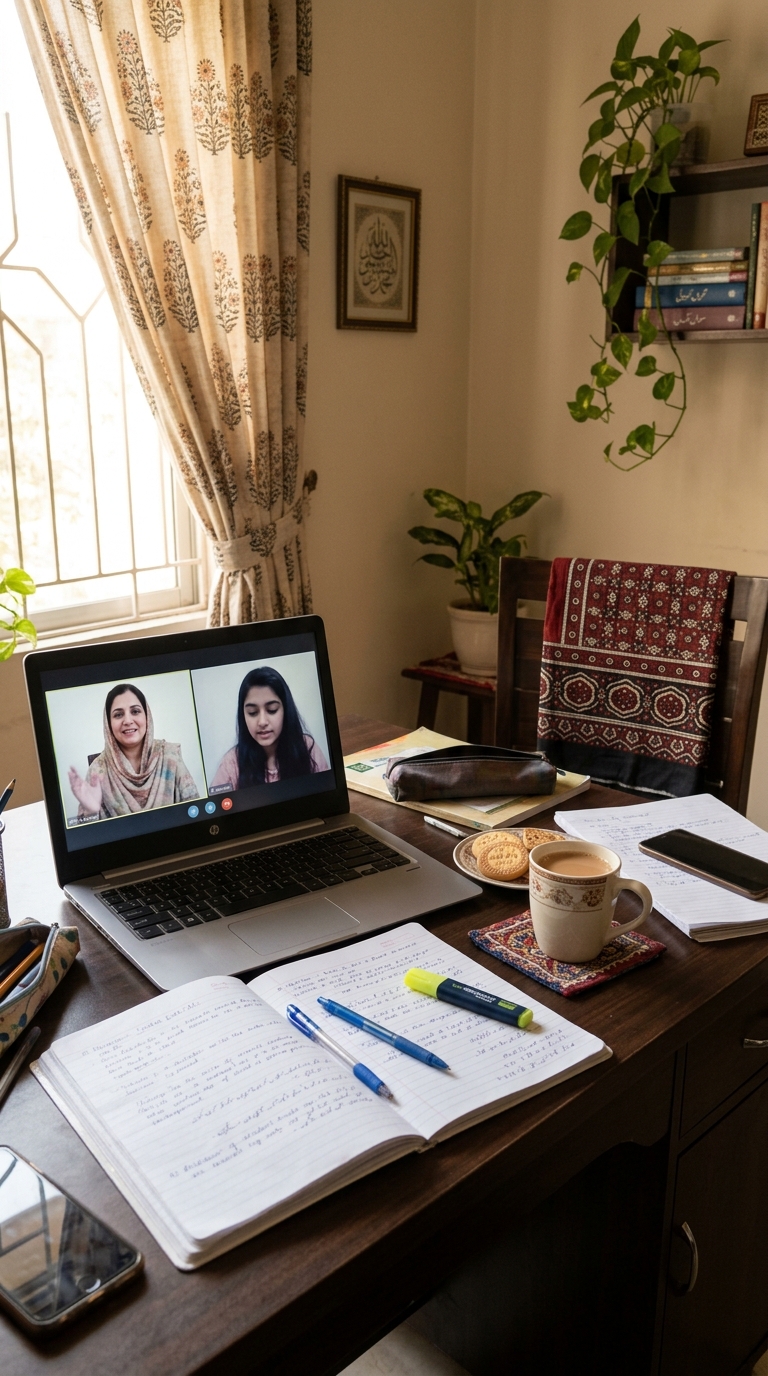
Online tutoring has quietly become one of the most reliable side incomes for teachers in Pakistan. You don't need a huge following or expensive equipment — just a stable subject you can teach well, a phone or laptop, and a system for finding students. This guide walks through exactly how to set that system up, based on real experience building a tutoring profile from scratch.
1. Pick Your Niche Before Anything Else
The tutors who struggle are the ones who advertise "all subjects, all classes." The ones who fill their calendar pick one or two subjects and one or two class levels, and become known for those. Board subjects with consistent demand in Pakistan include:
- Chemistry, Physics, and Math for Classes 9–10 (Matric) and 11–12 (FSc)
- O-Level and A-Level Sciences (Cambridge system — higher rates, English-medium parents)
- English and Urdu for younger classes (4–8)
- Computer Science / basic coding for middle and senior classes
2. Where to Actually Find Students
There's no single platform that works for everyone — most successful tutors in Pakistan combine two or three of these:
A. WhatsApp & referrals (highest conversion)
Parents trust word of mouth more than any app. Ask your current or past students' parents to refer you, join local WhatsApp groups for your area/school community, and keep a simple broadcast list for announcing seat availability each term.
B. Facebook groups
Search "[Your City] Tutor / Home Tuition" groups — Karachi alone has dozens with tens of thousands of members. Post a short, specific offer (subject + class + mode + city area), not a generic "I am available for tutoring" message.
C. Freelance and job platforms
- Indeed / Rozee.pk — create a tutor profile with a clear title like "Online Chemistry Tutor — Classes 9–10 (Matric/O-Level)"
- Preply / Superprof — international platforms; slower to build reviews but pay in USD
- Local tuition academies — many outsource overflow students to freelance online tutors on commission
D. Your own content (long-term compounding)
Short explainer videos on a tricky topic (a Chemistry numerical, an English grammar rule) posted to Instagram/YouTube build trust before a parent even messages you. This is slower but it's the only channel where your effort keeps working after you stop actively posting.
3. Setting Your Rate
Rates vary a lot by city, subject, and syllabus. As a rough starting benchmark for Pakistan in 2026:
| Type | Typical Rate (PKR/hour) |
|---|---|
| Matric/board subjects, individual | 800 – 1,500 |
| O/A-Level subjects, individual | 1,500 – 3,000 |
| Group sessions (3–5 students) | 400 – 700 per student |
| International students (via Preply, etc.) | USD 6 – 15 |
Start slightly below market rate for your first 3–5 students to build reviews and testimonials, then raise your rate as your calendar fills up. Never negotiate below a floor you've set for yourself in advance — decide that number before a parent asks.
4. Building a Profile That Actually Converts
Whether it's Rozee, Indeed, or just a WhatsApp status, your tutor profile needs four things:
- A specific title — not "Tutor available," but "Chemistry & Biology Tutor for Classes 9–10, 10 Years Experience"
- Proof — years of experience, qualifications, any board results your past students achieved
- Mode and logistics — online only, or online + home visits; days/times you're free; which platform you teach on (Zoom, Google Meet, WhatsApp video)
- A clear next step — "Message on WhatsApp for a free 15-minute trial class" converts far better than "Contact for details"

5. Tools You Need (and Don't)
You genuinely don't need much to start:
- Zoom or Google Meet (free tier is enough for 1-on-1s)
- A basic digital whiteboard or tablet for writing out working/diagrams — even a phone with a stylus app works
- A simple attendance/progress tracker — a spreadsheet is enough (no need for paid CRM tools starting out)
- A WhatsApp Business account, so parents see a proper business profile with your hours and catalog
6. Common Scams to Watch For
Online tutoring job posts are frequently used for scams targeting teachers. Red flags to walk away from immediately:
- Any "job" that asks you to pay a registration, training, or "kit" fee upfront
- Employers who only communicate via unofficial WhatsApp numbers and refuse a video call
- Offers that sound too high for the effort described (e.g., very high pay for "just chatting" with students)
- Requests for your CNIC, bank details, or ID scans before any real interview
7. Your First 30 Days: A Simple Plan
- Week 1 — Pick your niche, set your rate, write your profile description, set up WhatsApp Business.
- Week 2 — Post on 5–10 Facebook tuition groups, create your Rozee/Indeed listing, message 10 past students' parents for referrals.
- Week 3 — Run 2–3 free trial classes to convert interested leads; ask every trial student's parent for a written testimonial.
- Week 4 — Post your first short teaching video; review what worked and double down on the channel that brought your first real student.
Building a teaching or content brand alongside tutoring?
Digital Fattom shares practical, no-fluff guides on teaching, freelancing, and content creation in Pakistan. Check back for more.